
Introduction
Plumbing contractors face a straightforward business decision: offer a warranty program that builds customer loyalty and recurring revenue, or hand that opportunity to someone else. When a homeowner calls back three months after an $8,000 repipe because a fitting failed, you're paying for that callback out of your operating revenue unless you have a structured warranty program in place.
The program structure you choose directly shapes your profitability, customer retention, and risk exposure. Get it wrong, and you're funneling underwriting profits to a third party while losing control over the customer experience. Get it right, and those one-time installations start generating recurring revenue — with your business protected from unpredictable claim costs.
This guide breaks down what a contractor warranty program actually is, the types available to plumbing businesses, and the key factors to evaluate before choosing one.
TLDR
- Warranty programs cover labor and parts for plumbing repairs after installation, protecting both customers and contractors from unexpected callback costs
- You can choose between third-party reseller programs or owning your own reinsurance company, which captures underwriting profits instead of paying them out
- Decision factors include claims control, profit structure, administrative support, scalability, and customer retention impact
- The right program converts installs into recurring revenue and shifts warranty risk from your operating budget to a funded reserve
- Knowing how a warranty program is funded determines whether you profit from it or simply pay for coverage
What Is a Warranty Program for Your Plumbing Business?
A plumbing contractor warranty program is a service agreement you offer customers after completing a job. It covers parts, labor, or both for a defined period, protecting homeowners from repair costs and protecting your business from unstructured callback expenses.
This is different from:
- Manufacturer warranties on equipment (like water heaters or fixtures)
- Homeowner-facing home warranty companies that customers buy separately
- Informal callback policies that pull directly from your operating revenue
According to the NAIC Service Contracts Model Act, service contracts are agreements "to perform the repair, replacement, or maintenance of property for the operational or structural failure...due to a defect in materials, workmanship, or normal wear and tear." Importantly, regulators treat these contracts as service agreements, not insurance.
Core Components of a Plumbing Contractor Warranty Program
Every contractor warranty program consists of three functional layers working together:
1. Coverage Agreement This defines what you promise to the customer. Typical plumbing coverage includes:
- Labor callbacks on completed installations
- Parts replacement for defective components
- Pipe repairs and fixture work
- Water heater replacements
- Drain line and supply line repairs
Clear exclusions matter. Poor exclusion language leads to high claim frequency and program losses.
2. Claims Adjudication Process This determines how repair requests are handled and who pays for them. Someone must decide whether a claim is valid, dispatch the technician, and communicate with the customer — and those responsibilities need to be defined before the first claim arrives.
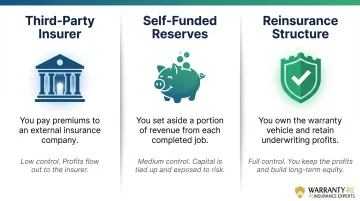
3. Financial Backing Mechanism This is where the biggest difference between program types emerges. Options include:
- Third-party insurer funding (you pay premiums to external company)
- Self-funded reserves (you set aside money from each job)
- Reinsurance structure (you own the warranty vehicle and retain profits)
The financial backing mechanism determines whether claim costs come from a third party's reserves or your own company—directly affecting profit and control.
Why Plumbing Businesses Are Adding Warranty Programs
Understanding the structure of a warranty program matters because the business case for offering one is strong: warranty programs convert one-time installations into ongoing customer relationships. McKinsey reports that "customer satisfaction and an orientation toward high-quality service can improve customer retention and referrals by 10 to 20 percent."
Key operational benefits for plumbing contractors:
- Stands out from competitors, most of whom rely on informal callback policies rather than structured warranties
- Shifts customer focus from price to value, making your quote harder to compare on cost alone
- Creates natural touchpoints through renewals and check-ins, keeping your name in front of customers between jobs
- Replaces unpredictable callback expenses with a structured cost model you can plan around
The home warranty market is substantial. Colonnade Advisors reports the direct-to-consumer home warranty channel was valued at $2.5 billion in 2023, growing at 7% annually. However, only about 6 million homeowners currently have warranties.
That leaves 79.7 million without coverage — a real opportunity for contractors who offer warranty programs directly rather than leaving customers to find coverage elsewhere.
Types of Warranty Programs Available to Plumbing Contractors
Plumbing contractors face two fundamentally different models. The choice has major implications for who profits from the program and how much control you retain.
Third-Party Reseller Programs
Under this model, you partner with an established warranty administrator or home warranty company. You sell or recommend their program to customers, who pay premiums to the third party. The external company handles claims, and you typically receive a referral fee or commission.
Financial Reality: Frontdoor Inc. (American Home Shield's parent company) reported 2024 revenue of $1.84 billion with claims costs of $852 million—a 54% gross margin. Their operating income was $332 million (18% margin). This means for every dollar of premium collected, the warranty company retained 54 cents before operating expenses and kept 18 cents as net profit.
The trade-off: You get lower administrative complexity upfront. The cost: you surrender control of the claims experience and a significant share of potential revenue. When the third-party provider delivers poor service, your customer blames your business — not theirs.
Proprietary Reinsurance-Backed Programs
With a reinsurance model, you establish your own administrator obligor company — backed by an A-rated insurer. Premiums flow into your company instead of a third party's. You control claims adjudication, set service standards, and keep the underwriting profit.
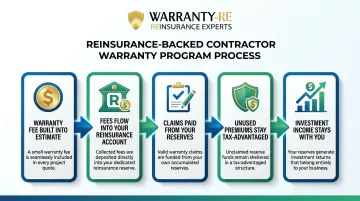
How it works:
- Warranty fees are built into every job estimate
- Fees flow into your reinsurance account (not a third party's)
- Claims are paid from your reserves, managed by your administrator
- Unused premiums remain in your tax-advantaged structure
- Investment income on reserves belongs to you
This model is more complex to set up but is specifically designed to let contractors replace third-party providers entirely. The premiums your customers already pay fund your reserve — and when claims run below projections, you keep the difference.
WarrantyRE helps plumbing and home service contractors build and manage exactly this type of program — handling compliance, claims administration, and company formation so you capture the underwriting profit that would otherwise go to a third party.
Key Factors to Consider When Choosing a Warranty Program
The right warranty program depends on your business size, growth goals, risk tolerance, and administrative capacity. Five factors connect program features to real business outcomes.
Coverage Scope and Claims Control
Coverage terms define what customers expect and what you're obligated to deliver. Overly broad coverage drives high claim rates. Overly narrow coverage undermines customer trust.
Evaluate whether coverage aligns with your actual work:
- New installs vs. service work vs. repiking
- Water heaters, fixtures, drain lines, supply lines
- Equipment vs. labor (manufacturer warranties often cover parts)
Claims control is the hidden cost most contractors overlook. Before signing with any program, get clear answers on three things:
- Who decides if a claim is valid — you or the third party?
- Who dispatches the technician?
- Who communicates with the customer during a claim?
Loss of claims control means poor claims handling reflects on your brand. Nevada's Division of Insurance warns that third-party providers may pay "only the wholesale amount...which may be significantly less than the full retail cost a consumer would pay directly."
Profit Structure and Revenue Potential
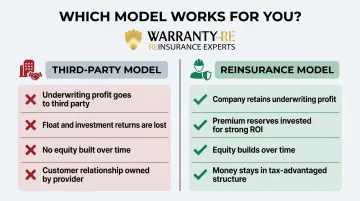
This is the factor with the biggest long-term impact on your bottom line. In third-party models, the warranty company keeps what the industry calls the "float" — that is, the difference between premiums collected and claims paid, plus investment returns on reserve funds.
If your warranty company weren't making a profit from you selling their products, would they continue doing business with you? There is profit to be had — the question is who captures it.
Industry data shows home warranty marketer margins range from 30% to 45%. Frontdoor's 2024 gross retention was 54%. This is revenue you're leaving on the table.
A reinsurance structure changes that math entirely:
- Your company retains the underwriting profit
- You invest premium reserves for additional ROI
- You build equity in the program over time
- Money that would go to third parties stays in your tax-advantaged structure
Administrative Support and Compliance Requirements
Warranty programs are subject to state-level insurance and service contract regulations. More than 30 states have adopted the NAIC Service Contracts Model Act. Eight jurisdictions have no specific guidelines.
Typical requirements include:
- Provider licensing or registration
- Financial solvency requirements (often via reimbursement insurance)
- Consumer disclosures and recordkeeping
- Prohibited acts provisions
A contractor who sets up a program without understanding these requirements risks fines, licensing issues, or voided contracts.
Distinguish between programs that provide full-service administration — claims, legal filings, tax returns, performance reporting, bookkeeping — versus self-managed programs where you handle compliance independently. That distinction has real consequences at tax time and during audits. WarrantyRE handles all compliance management, regulatory filings, and tax coordination, partnering with CPAs and legal counsel to ensure contractors operate to the letter of the law.
Scalability and Business Fit
A warranty program should grow with your business. A program designed for a solo plumber won't function well for a multi-crew operation with dozens of active warranties.
Evaluate whether the program can:
- Handle increased claim volume as you grow
- Support multiple technicians and service territories
- Accommodate geographic expansion into new markets
- Maintain profitability as scale increases
Some programs lock contractors into long-term contracts or charge escalating fees as volume grows. Others become more profitable with scale. If you're planning to add crews or expand into new zip codes, confirm upfront how the program's cost structure changes as your volume does.
Impact on Customer Retention and Loyalty
The KPI most directly influenced by warranty programs is customer lifetime value and repeat service rate. A warranty program creates a structured reason for customers to remain connected after the initial job — through annual check-ins, renewal touchpoints, and claims service interactions.
Frontdoor's SEC filings show 78% of their revenue comes from renewals, with retention rates between 78.5% and 79.9%. Industry-wide, Colonnade reports that 80% of home warranty revenue comes from renewals, with direct-to-consumer renewal rates exceeding 70%.
Those numbers reflect a business model built on staying connected to customers. The question is whether that relationship runs through you or through a third party:
Contractor-owned programs allow you to control the quality of every customer interaction, reinforcing brand trust.
Third-party programs may create situations where a customer has a poor experience with the warranty company and associates that frustration with the plumber who sold them the program.
How WarrantyRE Can Help Your Plumbing Business
WarrantyRE is a reinsurance partner founded in 1994, helping plumbing contractors and other home service businesses replace third-party warranty providers. The model helps you establish and manage your own administrator obligor reinsurance company, allowing you to capture underwriting profits instead of paying them to external providers.
WarrantyRE has helped hundreds of business owners build profitable, compliant warranty programs. Starting in the automotive space — where the company now serves 400+ auto dealers — WarrantyRE brought that reinsurance expertise into home services, working with HVAC, roofing, plumbing, and electrical contractors nationwide.
Full-Service Approach
WarrantyRE handles the entire administrative burden, so you capture 100% of underwriting profits without managing the complexity alone:
- Program setup and company formation
- Staff training and onboarding
- Claims handling and management
- Compliance management and regulatory oversight
- Legal forms, filings, tax returns, and renewals
- Bookkeeping and financial reporting
- Ongoing performance analysis and optimization
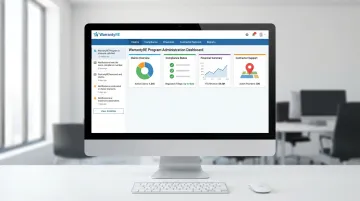
That full-service coverage is also what separates WarrantyRE from other reinsurance options.
Key Differentiators
- 30+ years in business with hundreds of profitable programs built for contractors
- No large volume or capital requirements to get started
- A-rated insurer backing limits your personal liability exposure
- Premium reserves are yours to invest — all investment income stays with you
- Transparent pricing with no hidden fees or surprise costs
- Claims, compliance, bookkeeping, and filings all handled for you
- Shared-success model: WarrantyRE only succeeds when you do
Conclusion
Choosing a warranty program is one of the most impactful financial decisions a plumbing business owner can make. It affects customer satisfaction, but it also determines whether you're building equity and capturing profit or subsidizing a third party's bottom line.
The best warranty program for your plumbing business isn't the easiest one to sign up for. It's the one that aligns with long-term growth goals, preserves control over the customer experience, and transforms warranty risk into a managed, profitable part of your business.
As your business grows and program performance data becomes available, revisit this decision. A program that works well for a two-truck operation often needs to be restructured once you're running a 10-truck fleet. At that scale, options like a captive reinsurance structure—where your business captures the underwriting profit directly—become worth a serious look. The goal is simple: every warranty fee you collect should build value for your business.
Frequently Asked Questions
What is the difference between a third-party warranty program and owning your own warranty company as a plumbing contractor?
In a third-party program, you refer customers to an external company that keeps the underwriting profit and controls claims. In a proprietary reinsurance model, you own the warranty vehicle, retain 100% of the profit, and control the entire claims experience while a partner like WarrantyRE handles administration.
How much does it cost for a plumbing business to set up its own warranty program?
Setup costs vary depending on program structure and administrative partner. Most contractors assume they need to be large or well-capitalized to get started, but that's rarely the barrier. Contact WarrantyRE for guidance on cost structure tailored to your business size and volume.
What types of plumbing work are typically covered under a contractor warranty program?
Covered work typically includes labor and parts for repairs on completed installations such as pipe repairs, fixture installations, drain work, and water heater replacements. Coverage terms are defined by your specific program agreement and can be customized to match your service offerings.
Can a smaller plumbing company realistically run its own warranty program?
Yes. Reinsurance-backed programs are designed to be scalable for businesses of all sizes. Working with a full-service administrative partner like WarrantyRE reduces the operational burden, so smaller contractors can participate without managing compliance or bookkeeping themselves.
How do warranty programs help reduce service callback costs for plumbing contractors?
With a formal warranty program in place, callback costs are funded by collected premiums rather than paid out of operating revenue. That shifts financial risk to the warranty vehicle, keeping your margins intact.
What should plumbing business owners look for in a warranty program agreement before signing?
Review who controls claims adjudication, how underwriting profits are distributed, what compliance and administrative obligations fall on you, and whether the program partner provides ongoing support or leaves you to manage it alone. Missing any of these details can mean losing profit share or inheriting compliance obligations you weren't expecting.