
Introduction
You've wrapped up a major panel upgrade, collected payment, and moved on to the next job. Three weeks later, your phone rings—the homeowner reports a circuit breaker tripping repeatedly. Without a formal warranty structure, you're covering that callback entirely out of pocket: truck roll, labor hours, diagnostic time, and any replacement parts.
Scale that across dozens of jobs per year and the financial drain adds up fast. Research shows the average callback costs electrical contractors $150 to $400 per incident, and businesses with a 10% callback rate on 500 monthly jobs can lose up to $20,000 every month.
Choosing the wrong warranty program makes this worse. Handing obligations to a third-party provider means surrendering control over claims decisions and paying underwriting profits to someone else. Choosing the right structure protects your margins, strengthens customer relationships, and turns warranty coverage into recurring income.
What follows covers the types of warranty programs available to electrical contractors, the factors that matter most when evaluating them, and how to build a structure that works in your favor.
TL;DR
- Warranty programs cover labor and materials for completed electrical work, but structures vary—from third-party plans to contractor-owned reinsurance companies
- Third-party programs keep underwriting profits; contractor-owned reinsurance models let you retain 100% of unused premiums
- Evaluate coverage scope, claims handling, cost structure, compliance requirements, and administrative support before choosing
- Reinsurance programs deliver the highest profit potential by eliminating the middleman and building tax-advantaged reserves
- Regular performance reviews ensure your program remains profitable as your business scales
What Is a Warranty Program for Electrical Contractors?
A warranty program for electrical contractors is a defined commitment to repair or replace covered electrical work within a set period, backed either by a third-party provider or by the contractor's own program. Unlike the informal workmanship guarantees often included in job contracts, a formal warranty program creates a managed, budgeted process for handling callbacks — turning unpredictable costs into a controlled financial process.
Three types of warranties apply to electrical work:
- Workmanship warranties cover labor quality and are typically included in the original contract at no additional charge
- Manufacturer warranties cover panels, breakers, fixtures, and devices—provided by companies like Square D, Leviton, Lutron, and Siemens
- Comprehensive service warranty programs extend coverage beyond standard workmanship guarantees and are actively sold or bundled with installations
The Federal Trade Commission distinguishes warranties from service contracts: a warranty typically comes included with a product or service at no additional cost, while extended warranties or service contracts cost extra and may cover different issues or timeframes.
Common Warranty Program Structures
Electrical contractors can structure warranty programs in several ways:
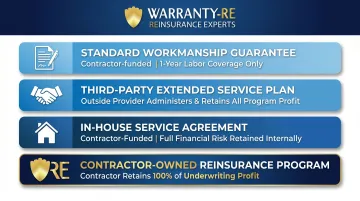
- Standard workmanship guarantees: Contractual clauses defining the contractor's responsibility for labor quality, typically for one year from project completion
- Third-party extended service plans: Sold through an outside provider that manages claims and retains underwriting profits
- In-house service agreements: Managed directly by the contractor, who funds claims from operating capital
- Contractor-owned reinsurance programs: The contractor establishes their own warranty company, collects premiums, holds reserves, and retains all underwriting profits
Why Electrical Contractors Need a Formal Program
Each of those structures above solves a different problem — but only if you've actually chosen one. Without a defined program, warranty callbacks are handled ad hoc. There's no system to track costs, no reserves set aside to cover repairs, and no mechanism to recoup expenses.
Industry data shows the average electrical contractor callback rate is 6%, with top performers below 2%. Each unmanaged callback drains profit margins and increases customer churn by up to 35%. A formal program puts dedicated funding behind those callbacks — and in contractor-owned structures, the unspent reserves stay with the business rather than flowing to a third-party provider.
Types of Electrical Warranty Programs: Third-Party vs. Reinsurance
Most electrical contractors default to third-party extended warranty providers without understanding the financial trade-off: the third-party keeps the underwriting profit—the money left over after claims are paid.
Third-Party Warranty Programs
In this model, the contractor sells or bundles a service plan backed by an outside company. The outside company collects premiums, processes claims, and retains any surplus. The contractor may earn a small referral fee but has no control over claims decisions or program profitability.
Key operational risk: The contractor has no influence over how claims are handled. When a third-party denies a claim, the customer blames the contractor—not the warranty company—damaging the relationship even when the decision was outside the contractor's control. More than 50% of customers will switch to a competitor after a single negative service encounter.
In-House Service Agreements
Some contractors create their own service contracts and fund claims directly from operating capital. This approach offers more control but exposes the business to uncapped financial risk. Self-insuring labor warranties is dangerous: the contractor assumes 100% of claims costs with no external backing, and multiple simultaneous claims can overwhelm cash flow.
Contractor-Owned Reinsurance Programs
In this model, the contractor establishes their own administrator obligor company, which collects warranty premiums from customers, holds those funds in reserve, invests them, and pays claims. Any surplus goes to the contractor's company — not a third-party provider.
Key structural advantages of this model include:
- Backed by A-rated insurers, so customers are protected even if claims exceed reserves
- Contractor captures the upside when claims run below premiums collected
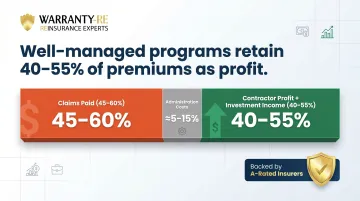
- Well-managed programs achieve loss ratios of 45–60%, meaning 40–55% of premiums stay as profit, administration, and investment income
This is the model WarrantyRE has specialized in for home service contractors, including electrical businesses, since 1994. It turns warranty programs from a pass-through expense into a direct revenue stream the contractor owns and controls.
Key Factors to Consider When Choosing a Warranty Program
The right program depends on your business size, average job value, service area, and growth goals. What works for a solo electrician won't scale for a multi-crew operation expanding into service agreements.
Coverage Scope and Eligible Work
Confirm the program covers the work you perform most frequently:
- Panel upgrades and replacements
- Circuit breakers and distribution systems
- Wiring and electrical connections
- GFCI and AFCI safety devices
- Fixtures, outlets, and switches
- Whole-home surge protection
- EV charger installations
- Grounding and bonding systems
Overly narrow coverage frustrates customers and generates disputes. Excessively broad coverage without proper exclusions—such as pre-existing code violations or improper use—creates unsustainable claims exposure.
Common warranty-relevant electrical problems worth reviewing include flickering lights, overloaded circuits, tripping breakers, poor grounding, hot outlets, dead receptacles, and buzzing from loose wiring.
Claims Handling Process
Coverage scope determines what's covered — how claims get handled determines whether customers stay. Evaluate who handles claims and how much control you retain. Faster, contractor-managed decisions protect customer relationships — a third-party call center with no context about the original job introduces delays and miscommunication.
J.D. Power's 2025 Property Claims Satisfaction Study found claims completed within 10 days scored 762 on a 1,000-point scale, while claims taking more than 31 days scored just 595—a 167-point drop.
Look for transparency in denial processes and clear accountability for customer communication. Claim denials damage the contractor's reputation regardless of who issues them.
Program Cost Structure and Profit Potential
Compare how each program distributes premium revenue:
- Third-party model: The contractor earns little or nothing from unclaimed premiums
- Reinsurance model: Unclaimed premiums accumulate as the contractor's profit
According to the Casualty Actuarial Society, investment income can represent as much as 25% of written premium on a present value basis for extended warranties, because premiums are collected upfront while claims are paid over time.
Assess upfront and ongoing costs: third-party programs typically require no setup cost but permanent profit sharing; reinsurance programs have setup and administration costs but generate long-term financial upside.
Contract Terms, Exclusions, and Compliance
Review exclusions carefully:
- Code violations discovered after installation
- Damage from external electrical events
- Pre-existing wiring issues
- Failure to follow maintenance instructions
Ensure exclusions are reasonable and clearly communicated to customers to prevent disputes. The NAIC Service Contracts Model Act (#685), adopted by more than 30 states, regulates service contracts as distinct from insurance. Contracts must be written in clear language (minimum 10-point type), disclose total price, deductibles, exclusions, and transferability, and offer a free-look period (20 days from mailing or 10 days at delivery) for full refund if no claim was made.
Programs not in regulatory compliance expose contractors to fines and invalid contracts.
Administration and Scalability
Ask who handles:
- Billing and renewals
- Claim documentation
- Compliance filings
- Tax reporting
- Performance tracking
A program that puts billing, compliance filings, and tax reporting on the contractor's plate becomes a real bottleneck once you're running multiple crews. Evaluate whether the program can scale with your business—adding technicians, expanding service areas, or increasing revenue should not require rebuilding the warranty structure from scratch.
Customer Experience and Retention Impact
A well-structured program differentiates you from competitors who offer no post-installation protection. Increasing customer retention rates by just 5% can increase profits by 25% to 95%. The cost to acquire a new customer is 5 to 7 times higher than retaining an existing one.
Look for programs that support recurring touchpoints—annual check-ins, renewal reminders, maintenance add-ons—that build loyalty and reduce customer acquisition costs over time.
How WarrantyRE Can Help Electrical Contractors Build a Profitable Warranty Program
WarrantyRE is a reinsurance partner that has been helping home service contractors—including electrical businesses—establish and manage their own administrator obligor reinsurance companies since 1994, bringing over 30 years of experience from the automotive dealer F&I space into the contractor market.
WarrantyRE's model is designed so electrical contractors capture 100% of underwriting profits from their warranty programs rather than paying them to a third-party provider, turning warranty offerings into a recurring revenue stream.
Key advantages include:
- Gets your company set up quickly with full regulatory compliance from day one
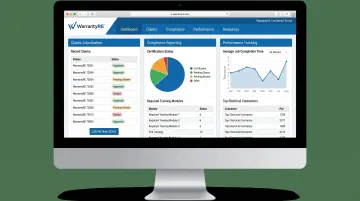
- Handles all administration — claims adjudication, compliance filings, performance reports, bookkeeping, and tax returns
- Provides hands-on onboarding and staff training for a smooth program launch
- Backs every program with A-rated insurers, protecting customers even when claims exceed reserves
- Charges no hidden fees, with fully transparent pricing
- Manages all legal forms, filings, and renewals on your behalf
If you're ready to stop sending underwriting profits to a third-party provider and start building a program that works for your business, WarrantyRE is set up to make that transition straightforward.
Conclusion
The right warranty program for your electrical business is not the cheapest or most widely marketed option—it's the one that aligns with your service mix, financial goals, and the customer experience you want to deliver.
- Third-party programs are easy to implement but surrender long-term profitability
- In-house programs offer control but create uncapped financial risk
- Contractor-owned reinsurance programs require setup, and return the highest profit potential by cutting out the middleman
Review your current warranty structure against the factors covered in this guide—starting with who is keeping the underwriting profit. Revisit this decision as your revenue grows, your team expands, and your service offerings shift. The contractors who make that switch early don't just improve their margins—they build businesses that are harder to compete with.
Frequently Asked Questions
What is the 50/50 rule for appliances?
The 50/50 rule holds that if repair costs exceed 50% of replacement cost, replacement is the smarter financial choice. In warranty programs, this logic drives how coverage caps and repair-versus-replace thresholds are written into contract terms to prevent disputes.
What does a warranty program for electrical contractors typically cover?
Coverage varies by program but commonly includes labor and parts for repairs to installed electrical systems such as panels, wiring, breakers, outlets, and fixtures. Workmanship errors discovered after job completion and component failures within a defined warranty period are typically the core covered events.
What is the difference between a third-party warranty and a reinsurance program for contractors?
With a third-party program, the contractor sells a plan underwritten by an outside company that keeps any unclaimed premium as profit. In a reinsurance program, the contractor owns the underwriting entity and retains that surplus—making the reinsurance model significantly more profitable over time.
How much can an electrical contractor earn from offering a warranty program?
Earnings depend on premium volume, claims frequency, and program structure. In a reinsurance model, profit is the difference between premiums collected and claims paid — well-managed programs with loss ratios of 45–60% typically retain 40–55% of premiums as profit, plus additional investment income.
What are the risks of not offering a warranty program as an electrical contractor?
Without a formal program, warranty callbacks come out of pocket with no process to manage them. Beyond cost, the business has no way to stand apart from competitors and loses the recurring revenue a structured plan would otherwise generate.
How do I handle warranty claims for electrical work under my own program?
In a reinsurance program, the contractor controls the claims adjudication process — either managing it internally or through an administrator like WarrantyRE. That control extends to timelines, customer communication, and repair decisions that protect both the client relationship and the claims reserve.